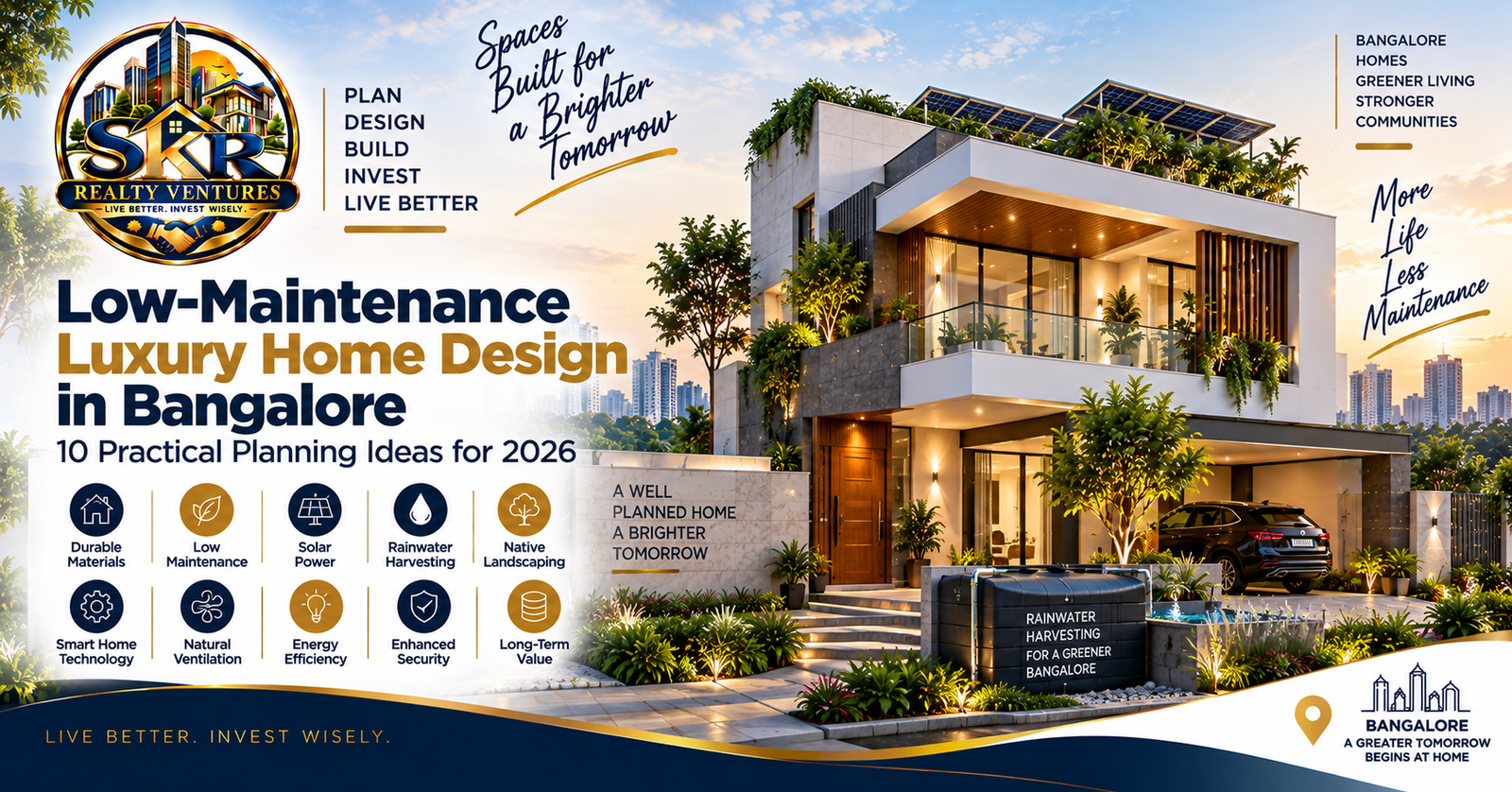
Luxury home design in Bangalore is changing. Buyers are increasingly looking beyond expensive finishes and asking a more practical question: how can a premium home deliver comfort, beauty and convenience without becoming expensive or difficult to maintain every year?
A low-maintenance luxury home is not a stripped-down house. It is a carefully planned home where materials, services, landscape, technology, ventilation, water systems and room layouts are selected to reduce recurring effort while preserving a high-quality living experience. In Bangalore, this approach is particularly useful because construction costs are rising, weather patterns can be unpredictable, water management matters, and many homeowners want homes that remain comfortable and attractive for decades.
Recent Bengaluru market reporting also shows strong buyer interest in larger and premium homes, while rising property and construction costs are making efficiency increasingly important. JLL reported that Bengaluru residential prices rose 3.1% quarter-on-quarter in Q2 2026 and highlighted demand for larger homes alongside rising construction costs.
1. Start With a Design That Reduces Future Maintenance
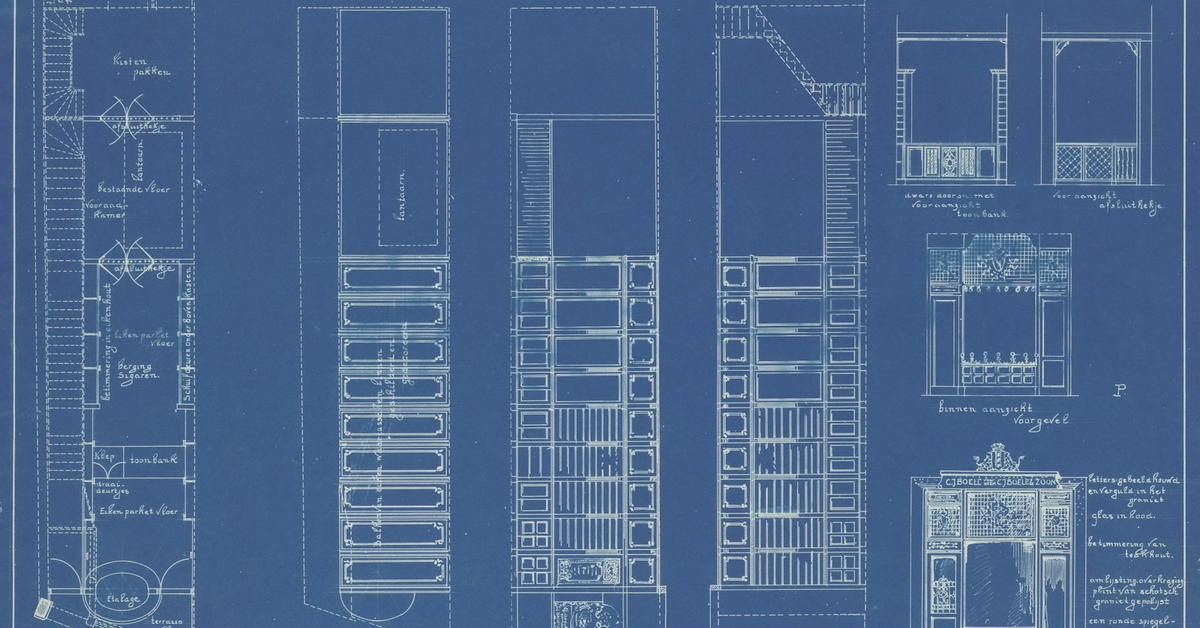
The first principle of a low-maintenance luxury home is simple: solve maintenance problems during design instead of trying to fix them after construction. A beautiful elevation with difficult-to-clean surfaces, complicated roof details or inaccessible service areas may look impressive initially but can become expensive over time.
During planning, consider how frequently every major element will need cleaning, servicing, repainting or replacement. Keep external ledges limited, provide practical access to water tanks and equipment, plan inspection points for plumbing, and avoid unnecessary decorative projections that collect dust and rainwater.
A well-designed home should also separate living spaces from service zones. Electrical panels, plumbing access, outdoor AC units, pumps and filtration equipment should remain accessible without disrupting everyday family life. These small decisions can make routine maintenance faster and less intrusive.
2. Choose Durable Materials for Bangalore’s Climate
Luxury does not have to mean delicate. High-quality materials should be selected for durability, cleanability and performance as well as appearance.
- Use exterior finishes that tolerate sunlight, monsoon moisture and regular cleaning.
- Select flooring based on traffic, slip resistance and long-term maintenance requirements.
- Prefer quality sanitary fittings with readily available replacement parts.
- Use moisture-resistant materials in kitchens, utility rooms and bathrooms.
- Choose exterior doors and windows that are appropriate for Bangalore’s weather exposure.
For stone, wood-look finishes, tiles, paints and façade materials, ask the design and construction team about expected service life, cleaning method, replacement availability and warranty. A material that costs slightly more initially may be more economical if it avoids frequent repairs or refinishing.
3. Design Natural Ventilation and Daylight Into the Plan
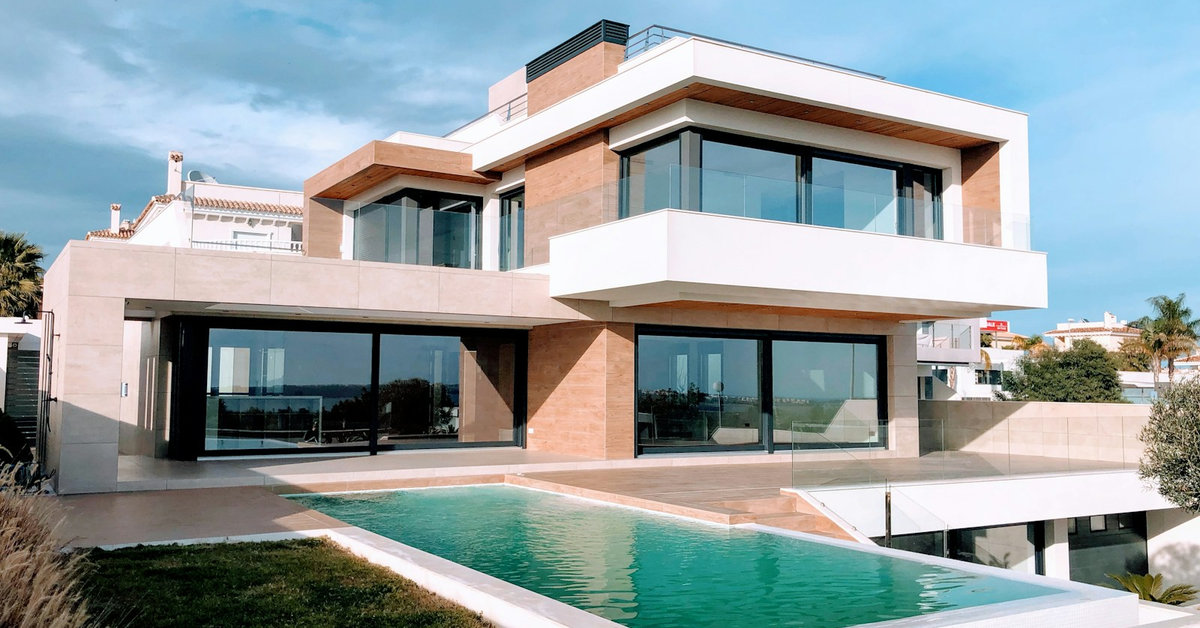
A premium home should feel comfortable without depending entirely on mechanical systems. Orientation, window placement, shading, internal courtyards and cross-ventilation can reduce the need for artificial lighting and excessive cooling.
Plan openings so that air can move naturally through important living areas. Where the plot allows, courtyards, skylights and double-height spaces can introduce daylight and create visual openness. External shading devices, pergolas and appropriately positioned trees can help control heat gain while retaining daylight.
Climate-first planning has become a noticeable residential design theme in Bangalore, with architects increasingly focusing on ventilation, courtyards, shading and passive comfort rather than treating them as afterthoughts.
4. Make Water Management Part of the Luxury Experience
Water systems are one of the most important areas for long-term residential planning in Bangalore. A low-maintenance luxury home should make water storage, rainwater collection, filtration, reuse and drainage easy to monitor and service.
Consider integrating rainwater harvesting, efficient plumbing fixtures, suitable storage capacity, filtration where required and a practical greywater or treated-water strategy where feasible. Roof drainage should be designed carefully so that heavy rain does not create seepage, staining or landscape damage.
Access matters as much as the equipment itself. Tanks, filters, pumps and inspection chambers should be positioned so technicians can reach them safely. Labeling major valves and service points can also save time during future maintenance.
5. Use Smart Home Technology Where It Has a Practical Purpose
Smart technology should simplify life rather than create another system that homeowners have to troubleshoot. Focus on functions that provide measurable convenience or protection.
- Smart lighting controls for frequently used rooms.
- Automated outdoor and landscape lighting.
- Video doorbells and integrated security cameras where appropriate.
- Smart water-level monitoring for tanks.
- Energy monitoring for major electrical loads.
- Automated curtains or shading in selected rooms.
- Leak detection around vulnerable plumbing areas.
For a future-ready home, also plan the wiring infrastructure. Provide conduits, network points, electrical capacity and accessible service routes before walls are finished. This allows technology to be upgraded later without major civil work.
6. Keep Landscaping Beautiful but Easy to Manage
A luxury Bangalore home often benefits from greenery, but landscaping can become a significant recurring responsibility if the plant palette and irrigation system are poorly planned.
Use a balanced mix of native or well-adapted plants, shade trees, durable ground cover and low-maintenance planting zones. Avoid designing every part of the site as a high-maintenance lawn. Hardscape, planter beds and carefully selected vegetation can create a premium appearance with less daily attention.
Automatic irrigation can reduce manual work, while proper soil preparation and drainage help prevent recurring plant and water problems. Landscape lighting should also be designed around accessible wiring and service points.
7. Plan Kitchens and Bathrooms for Easy Cleaning
Kitchens and bathrooms typically receive more daily wear than other areas of a home. Their design therefore has a major impact on long-term maintenance.
Use practical countertop layouts, adequate storage and easy-to-clean backsplashes. Minimize inaccessible corners behind appliances and provide ventilation that helps control moisture. In bathrooms, carefully planned slopes, drainage, waterproofing and shower-screen details are more important than decorative complexity.
Wall-hung fixtures, concealed storage and clean-lined cabinetry can create a premium appearance, but they should always retain appropriate access for maintenance. Before finalizing drawings, ask where a plumber or electrician would work if a component failed five years later.
8. Build Energy Efficiency Into the Architecture
Energy efficiency is not only about installing solar panels. The building envelope, glazing, shading, insulation where appropriate, lighting, appliances and HVAC strategy all influence long-term operating costs.
Solar power can be considered when the roof structure and electrical design support it. LED lighting, efficient appliances and zoning of cooling systems can reduce unnecessary consumption. Large glazed areas should be evaluated for heat gain, glare and shading requirements instead of being selected purely for appearance.
The goal is a home that uses energy intelligently while maintaining the comfort expected from a premium residence.
9. Design for Security, Accessibility and Future Changes
Low maintenance also means reducing the need for major modifications later. Think about how the house might be used five, ten or fifteen years from now.
Provide safe service access, sensible stair and circulation dimensions, adequate electrical capacity, spare conduits and flexible rooms where possible. Security should be integrated into the site plan through controlled entry, suitable lighting, visibility and technology rather than added as a collection of disconnected devices.
Future flexibility is especially useful for families whose needs may change. A study can potentially become a bedroom, a guest room can support an older family member, and a terrace or utility zone can be planned for future equipment.
10. Control Maintenance Through a Professional Handover System
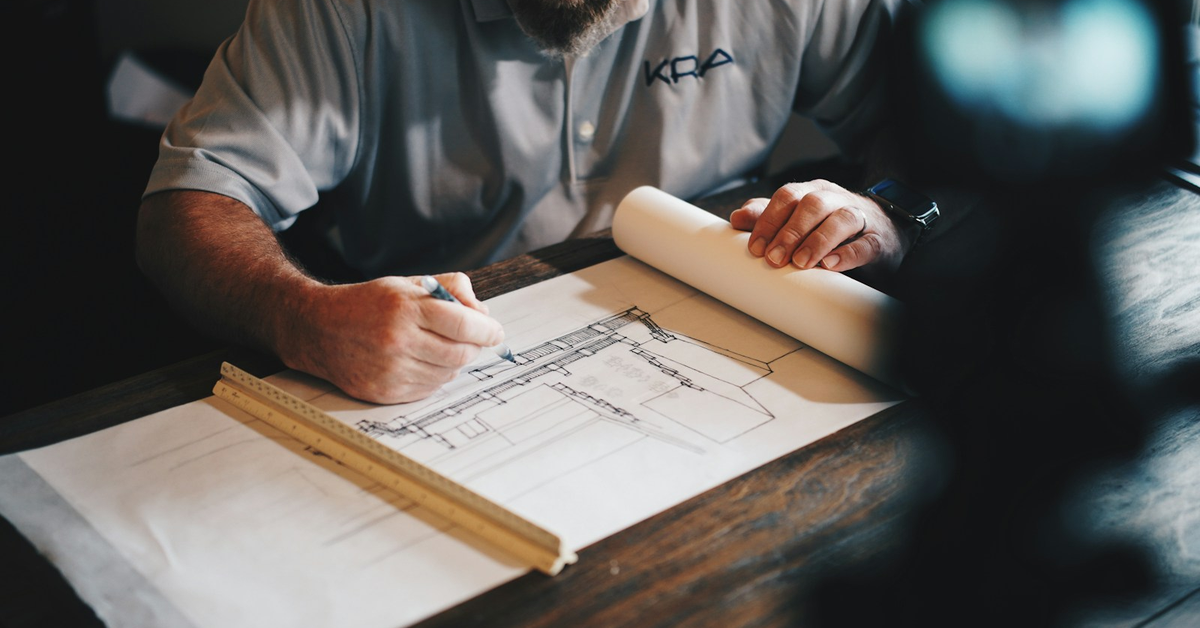
Even an excellent design can become difficult to maintain if the homeowner does not receive proper documentation at handover. A professional residential construction process should include a practical record of what was installed and how it should be serviced.
Keep copies of approved drawings, electrical layouts, plumbing layouts, waterproofing details, equipment manuals, warranties, paint codes, tile information and supplier contacts. Label key shut-off valves, electrical circuits, pumps and filtration systems.
A final quality inspection should also check doors, windows, plumbing fixtures, drainage, waterproofing-sensitive areas, electrical points, finishes, cabinets and external works. For a detailed property quality checklist, see Essential Checklist for Handover and Quality Inspection of a New Flat in Bangalore.
Low-Maintenance Luxury Home Planning Checklist
- Plan service access before finalizing the floor plan.
- Choose exterior materials for durability as well as appearance.
- Provide cross-ventilation and effective daylight wherever possible.
- Integrate rainwater harvesting and practical drainage.
- Use smart technology selectively for genuine convenience.
- Choose low-maintenance landscaping and efficient irrigation.
- Keep kitchen and bathroom service access practical.
- Evaluate solar, lighting, glazing and HVAC efficiency together.
- Provide spare conduits and electrical capacity for future upgrades.
- Prepare a complete handover and maintenance file.
How This Approach Can Improve Long-Term Home Value
Low-maintenance design is not simply about saving money on repairs. It can also improve everyday usability, reduce disruption and help a home remain visually appealing over time.
For Bangalore homebuyers and landowners, this is especially relevant when comparing a custom independent house with a ready property. A buyer should evaluate not only the purchase or construction cost, but also recurring maintenance, energy use, water management, replacement cycles and the quality of the underlying construction.
If you are considering an independent home, our guide on planning a future-ready independent house in Bangalore provides additional planning considerations. You can also review our guide to estimating house construction cost per square foot in Bangalore before setting a project budget.
10 Frequently Asked Questions
1. What is a low-maintenance luxury home?
It is a premium home designed with durable materials, practical service access, efficient systems and easy-to-manage landscaping so that ongoing maintenance is reduced without compromising comfort or appearance.
2. Is low-maintenance design more expensive to build?
Some durable materials and smart systems may increase initial costs, but careful planning can reduce future repair, replacement and operating expenses. The right choice depends on the project budget and expected service life.
3. Which materials are best for a low-maintenance exterior?
The selection should consider Bangalore’s sun, rain, dust and cleaning requirements. Durable tile, stone, quality exterior coatings and appropriately detailed façade systems can all be suitable when correctly specified and installed.
4. Should I install solar panels while building the house?
If solar is part of your long-term energy plan, it is generally useful to consider structural, electrical and roof provisions during design even if the complete system is installed later.
5. How can I reduce garden maintenance?
Use well-adapted plants, efficient irrigation, sensible hardscape and fewer high-maintenance lawn areas. A landscape designer can prepare a planting plan around your available time and water resources.
6. Does smart-home technology reduce maintenance?
Selected systems can reduce routine effort or provide early warnings, such as water-level monitoring, leak detection and automated lighting. However, unnecessary complexity can increase maintenance, so technology should be purpose-driven.
7. What should I consider for bathroom maintenance?
Prioritize waterproofing, drainage slopes, ventilation, accessible service points and easy-to-clean surfaces. These fundamentals matter more than decorative features alone.
8. How important is ventilation in a Bangalore home?
Good ventilation can improve indoor comfort and air movement. The best approach combines orientation, window placement, shading and mechanical ventilation where needed.
9. Can an existing house be converted into a low-maintenance home?
Yes. Depending on the structure, upgrades can include better drainage, efficient lighting, smart controls, improved waterproofing, landscaping changes, solar readiness and service-access improvements.
10. Who should help plan a custom low-maintenance home?
A coordinated team involving the homeowner, architect, structural engineer, services consultants and experienced construction professionals can help align appearance, durability, budget and long-term maintenance requirements.
Conclusion
A low-maintenance luxury home in Bangalore should be designed around how people actually live and how the property will perform over many years. Durable materials, passive comfort, water management, efficient energy use, practical landscaping, smart technology and accessible services can work together to create a home that feels premium without becoming unnecessarily difficult to operate.
The strongest results come from making these decisions early, before construction begins. If you are planning a new villa, independent house or custom residential project in Bangalore, a detailed design and construction strategy can help balance aesthetics, performance, budget and long-term value.
SKR Realty Ventures — Live Better. Invest Wisely.