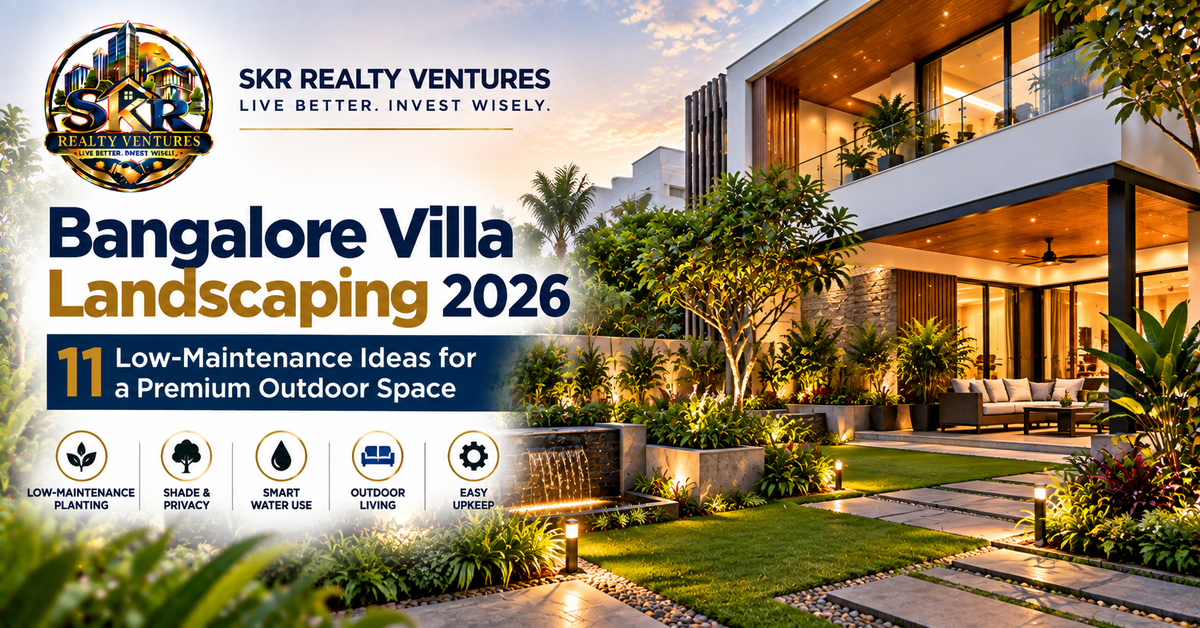
Bangalore Villa Landscaping 2026: 11 Low-Maintenance Ideas for a Premium Outdoor Space
Good landscaping can transform a Bangalore villa from a finished building into a complete home environment. The most useful landscape plans do more than add decorative plants: they create shade, guide movement, improve privacy, manage rainwater, frame the architecture and provide outdoor areas that are practical to maintain.
Landscape planning should begin alongside the house design. Drainage, paving levels, planting beds, service access and outdoor lighting are much easier to coordinate before construction is complete.
1. Start With a Landscape Zoning Plan
Divide the site into arrival, garden, family outdoor, service and utility zones. This prevents expensive paving and planting decisions from being made randomly after the building is finished.
- Entrance and pedestrian zone
- Vehicle and parking zone
- Primary garden area
- Private outdoor sitting area
- Service and maintenance access
2. Use Trees for Shade and Microclimate
Well-positioned trees can provide shade to outdoor seating and selected building surfaces. Choose species according to mature size, root behaviour, maintenance requirements and the available soil volume rather than selecting a tree only because it looks attractive when young.
3. Create Privacy With Layered Planting
Instead of building a completely solid visual barrier, combine taller planting, shrubs and lower groundcover. Layered planting can soften compound walls and create privacy while retaining a more natural appearance.
4. Reduce High-Maintenance Lawn Areas
A large lawn can look impressive but may require regular mowing, watering and attention. Use lawn selectively for places where the family will actually sit or play, and combine it with planting beds, paving and groundcovers elsewhere.
5. Connect the Landscape With the Villa Entrance
The main approach should feel intentional. A simple combination of paving, planting, low lighting and a focal tree can create a strong arrival experience without covering the entire frontage with decorative materials.
6. Plan Rainwater Movement Before Paving
Outdoor surfaces should be designed with proper falls and drainage. Rainwater should not be allowed to collect against the building. Where appropriate, landscape planning can also integrate rainwater harvesting or recharge measures subject to the site’s design and applicable requirements.
Current Greater Bengaluru Authority services include building-permission and property-related online services, while project-specific approval requirements should be verified for the actual site and design. Greater Bengaluru Authority
7. Choose Paving for Safety and Maintenance
Outdoor paving should be selected for slip resistance, cleaning, drainage and long-term durability. Avoid creating unnecessary changes in level between the house, garden and parking areas.
8. Add Outdoor Seating With Shade
A shaded courtyard, pergola or covered sit-out can make a garden much more usable. Position the seating according to privacy, afternoon sun, views and access from the kitchen or family areas.
9. Integrate Landscape Lighting Carefully
Use lighting to support safe movement and highlight selected trees, walls or architectural elements. Avoid excessive brightness. Layered lighting generally works better than installing identical bright fixtures everywhere.
10. Keep Irrigation and Maintenance Practical
Group plants with similar water needs and provide accessible hose points or an appropriate irrigation system. Keep valves, drainage points and service areas accessible so maintenance does not require disturbing finished landscape surfaces.
11. Design for the Mature Landscape
A landscape drawing should show what the garden is expected to become, not just how it looks on planting day. Consider mature tree height, canopy spread, root space, pruning access and the relationship between plants and windows.
Low-Maintenance Villa Landscape Checklist
- Landscape zones defined before final paving
- Tree locations checked against building and utility services
- Privacy planting selected for mature size
- Lawn restricted to genuinely useful areas
- Drainage falls coordinated with finished floor levels
- Outdoor seating given shade and privacy
- Lighting planned for paths and focal features
- Irrigation access provided
- Maintenance routes retained
- Mature plant size considered before purchase
Key Takeaways
A premium villa landscape does not need to be complicated. A restrained planting palette, comfortable outdoor seating, thoughtful shade, good drainage and well-planned lighting can create a sophisticated environment while keeping ongoing maintenance manageable.
For related guidance, read Modern Bangalore Villa Facade Planning 2026, Rainwater Harvesting for Bangalore Homes, and Climate-Responsive Home Design in Bangalore.
Frequently Asked Questions
1. What makes a Bangalore villa landscape low maintenance?
Appropriate plant selection, controlled lawn areas, accessible irrigation, good drainage and a manageable planting palette are key factors.
2. Should every villa have a lawn?
No. Lawn is useful where it supports actual use, but other planting and hardscape solutions may be more practical for some plots.
3. How should trees be selected?
Consider mature height, canopy spread, root behaviour, sunlight needs, maintenance and the distance from buildings and utilities.
4. Can landscaping improve privacy?
Yes. Layered trees, shrubs and groundcover can create visual screening while softening compound walls.
5. Why is drainage important in landscaping?
Poor drainage can cause waterlogging, paving problems and dampness near the building. Surface falls and drainage should be coordinated with the building design.
6. Where should outdoor seating be placed?
Choose a location with useful shade, reasonable privacy and convenient access from frequently used indoor spaces.
7. Is landscape lighting necessary?
It can improve evening usability and safety, but it should be targeted rather than excessive.
8. Should irrigation be automated?
Automation can reduce routine effort, but the system should still have accessible controls and be designed around the water requirements of the planting.
9. How early should landscaping be planned?
Ideally during architectural planning, because levels, drainage, paving, planting beds and service routes affect the building and site works.
10. How can a garden look premium without becoming expensive?
Use fewer, well-chosen materials and plants, create clear focal points and prioritise functional outdoor spaces instead of adding decoration everywhere.
Conclusion
Thoughtful Bangalore villa landscaping combines architecture, climate response, water management, privacy and everyday usability. Planning the outdoor environment before construction finishes gives homeowners more control over levels, services and long-term maintenance while creating a landscape that complements the villa rather than competing with it.