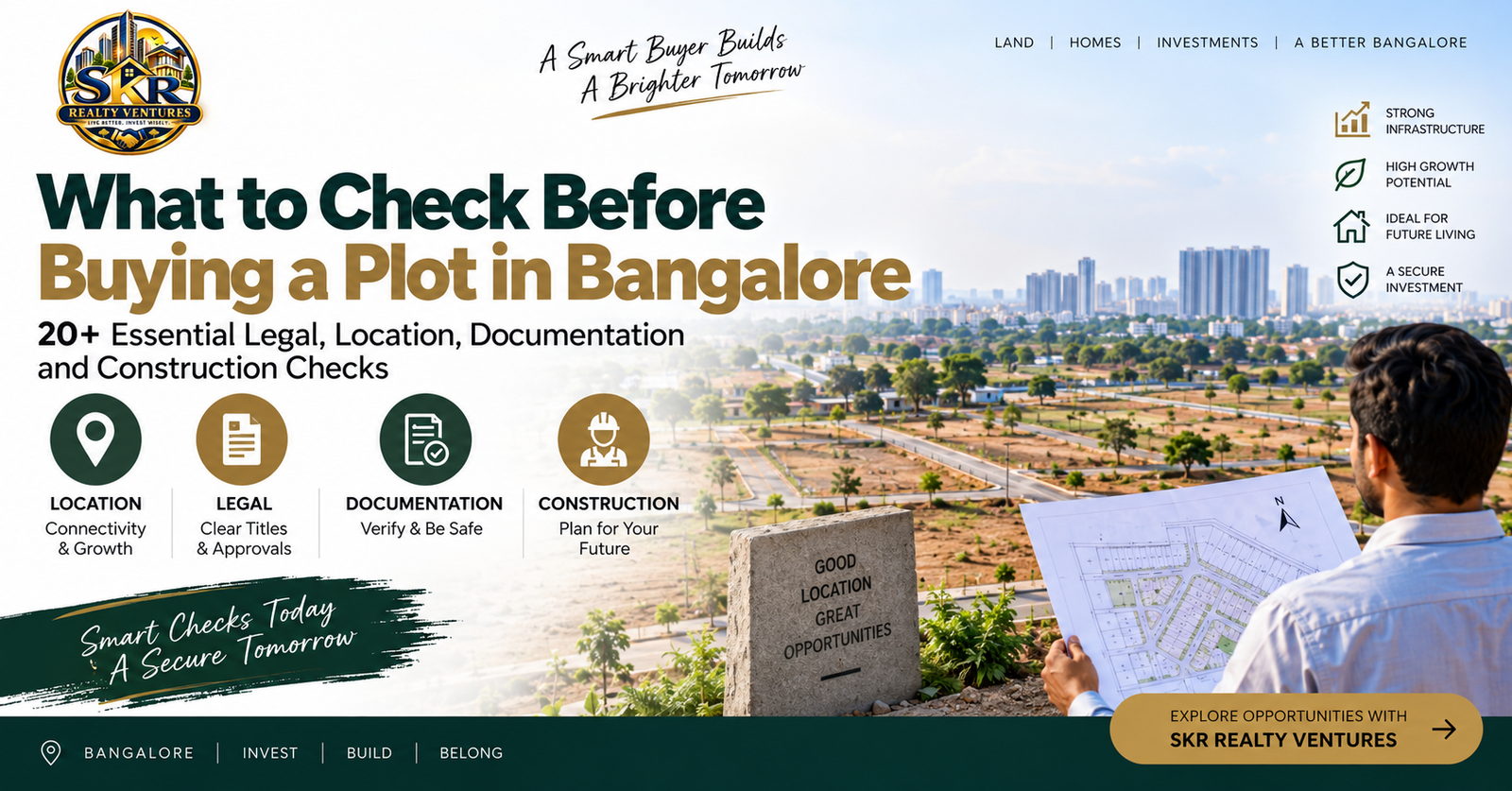
Buying a property in Bangalore, India is a major financial decision. Whether you are purchasing a home for your family, an apartment as an investment, or a plot for future construction, careful due diligence can help you avoid costly surprises. Bangalore's property market includes established neighbourhoods, rapidly developing suburbs, plotted developments, apartments, villas and commercial properties, so the right checks depend on the type and location of the property.
Top 10 Things to Check Before Buying a Property in Bangalore
1. Verify the Property Title and Ownership
Start by confirming who legally owns the property and whether the seller has the right to transfer it. Review the sale deed and the chain of title documents for earlier transactions. If the property has multiple owners, confirm that the required owners are participating in the transaction. A qualified property lawyer can help examine the title history and identify potential issues.
2. Check the Encumbrance Certificate
An Encumbrance Certificate (EC) can help you check registered transactions and certain encumbrances associated with a property for the relevant period. Compare the EC with the title documents and other records rather than relying on a single document. If there are loans, releases, claims or discrepancies, get them clarified before proceeding.
3. Confirm RERA and Project Approvals
For applicable real estate projects, check the project's registration and disclosures under the Real Estate (Regulation and Development) framework. Review the approved project details, promoter information, development status and other disclosures. Also verify the approvals and permissions relevant to the specific project and property type.
4. Verify Khata and Property Tax Records
For a Bangalore property, examine the applicable Khata or municipal property records and confirm that property tax records are consistent with the property details. Ask for recent tax-paid receipts and check whether there are outstanding dues. Where applicable, verify the current status of the property's municipal records before signing the sale agreement.
5. Check Building Plan, Approvals and Occupancy Documents
For apartments, villas and constructed properties, review the sanctioned building plan and relevant approvals. Depending on the property and project, documents such as a commencement certificate, completion certificate or occupancy certificate may be important. Make sure the actual construction broadly corresponds with the approved plans and permitted use.
6. Inspect the Location and Neighbourhood
Do not evaluate a property only from photographs or a single visit. Visit the area at different times of the day and, if possible, on a weekday and weekend. Check road access, traffic, public transport, schools, hospitals, shopping, drainage, water availability, power supply and the surrounding development. Also consider planned infrastructure projects, because they can affect convenience and future demand.
7. Understand the Total Cost, Not Just the Property Price
The purchase price is only one part of the budget. Depending on the transaction, you may also need to account for stamp duty, registration charges, brokerage, legal review, loan-related costs, maintenance deposits, parking or other project charges, interiors and taxes. Prepare a complete cost sheet before committing so you understand the actual acquisition cost.
8. Review the Sale Agreement and Sale Deed Carefully
Do not sign a sale agreement simply because the property appears suitable. Review the payment schedule, possession terms, default clauses, obligations of both parties, included fixtures and any conditions related to cancellation or refunds. The final sale deed should accurately describe the property, parties, consideration and rights being transferred. Independent legal review is advisable for a significant property transaction.
9. Check Loans, Dues and Pending Disputes
Ask whether the property is subject to a home loan, mortgage, attachment, litigation or other claim. For apartments, also check whether maintenance or other association dues are outstanding. Any loan closure or release documentation should be verified before completion of the transaction. If a seller cannot clearly explain an outstanding claim or liability, pause the transaction until it is resolved.
10. Compare the Price With Similar Properties
Compare the asking price with similar properties in the same micro-market. Look at factors such as land or built-up area, age, floor, orientation, parking, amenities, construction quality, road access and exact location. Comparing several properties can help you understand whether the asking price is consistent with the characteristics of the property.
A Practical Bangalore Property-Buying Checklist
- Verify ownership and title documents.
- Check the relevant Encumbrance Certificate.
- Verify applicable RERA registration and project disclosures.
- Review Khata, municipal records and property-tax status.
- Check sanctioned plans and applicable completion or occupancy documents.
- Inspect the location and neighbourhood personally.
- Calculate the complete purchase and ownership cost.
- Have the sale agreement and sale deed reviewed carefully.
- Check for loans, dues and disputes.
- Compare prices with similar properties nearby.
Final Thoughts
Buying property in Bangalore can be a rewarding long-term decision when the legal, financial and practical details are checked carefully. Take time to verify documents, understand the total cost, inspect the property and seek independent professional advice where necessary. A careful due-diligence process can give buyers greater clarity before they commit to a property purchase.
Disclaimer: This article provides general information and is not legal, financial or tax advice. Property rules, approvals, charges and documentation requirements can vary by property type and location and may change over time. Consult a qualified lawyer or relevant authority before completing a property transaction.